
After dedicating a lifetime to amassing wealth and assets ensure they are thoughtfully and efficiently distributed with an Estate Trust. An Estate Trust can be invaluable, offering many advantages that transcend mere financial management. In this comprehensive guide, we will explore the myriad benefits of establishing a trust, shedding light on its potential to preserve your legacy, minimize conflicts, and provide peace of mind for you and your loved ones.
Avoiding the Probate Conundrum
One of the primary advantages of an estate trust is its ability to circumvent the often lengthy and public probate process. Probate, the legal procedure through which a deceased person’s assets are distributed, can be time-consuming and costly. By placing your assets in a trust, you effectively bypass this arduous process, ensuring a seamless and expedited transfer of your possessions to your designated beneficiaries.
Maintaining Privacy and Discretion
In addition to avoiding probate, an estate trust offers a layer of privacy that is often desired when handling sensitive financial matters. Unlike wills, which become public records during the probate process, the details of a trust remain confidential. This privacy can be particularly beneficial when you plan to disinherit individuals or manage complex assets discreetly.
Tailoring Asset Distribution to Your Wishes With An Estate Trust
One of the most compelling advantages of an estate trust is the control it affords you over the distribution of your assets. Through a trust, you can specify who receives your possessions and how they are received. This level of customization can be invaluable in scenarios where you wish to protect beneficiaries from mismanaging their inheritance or ensure that assets are distributed according to specific conditions or timelines.
Safeguarding Assets for Beneficiaries with Special Needs
If you have a loved one with special needs, an estate trust can be a powerful tool to ensure their long-term care and financial security. A special needs trust, for instance, can provide supplemental support without jeopardizing the beneficiary’s eligibility for government assistance programs, such as Medicaid or Supplemental Security Income (SSI).
Minimizing Estate and Gift Taxes
Depending on the type of trust you establish, you may be able to minimize or even eliminate estate and gift taxes, thereby maximizing the value of your legacy for your beneficiaries. Irrevocable trusts, in particular, can be structured to remove assets from your taxable estate, potentially resulting in significant tax savings.
Protecting Assets from Creditors and Lawsuits
Transferring assets into an irrevocable trust can effectively shield assets from creditors and potential lawsuits. This is valuable for individuals in high-risk professions or those with substantial wealth, as it protects their hard-earned assets.
Streamlining Multi-State Asset Management
If you own real estate or other assets in multiple states, an estate trust simplifies the management and distribution of these possessions. By consolidating them under a single trust, you can avoid the complexities and expenses associated with navigating the probate laws of multiple jurisdictions.
Preserving Family Harmony and Minimizing Conflicts
Unfortunately, inheritance disputes are common, often straining familial relationships and leading to protracted legal battles. An estate trust can help mitigate these conflicts by clearly outlining your wishes and providing a framework for the fair distribution of your assets. Trust terms are less likely to be contested in court, reducing the potential for costly and emotionally draining disputes.
Facilitating Charitable Giving
For those with philanthropic inclinations, an estate trust can be an effective vehicle for facilitating charitable giving. Charitable remainder Trusts or charitable lead Trusts, allow you to support the causes you care about while potentially benefiting from tax advantages.
Ensuring Business Continuity
If you are a business owner, an estate trust can play a crucial role in ensuring the continuity of your enterprise. By transferring ownership interests into a trust, you can establish a clear succession plan and minimize disruptions during the transition process, safeguarding the company and the future of its employees.
Providing for Future Generations
An estate trust can be a powerful tool for creating a lasting legacy that spans generations. Through careful planning and structuring, you can establish trusts that provide ongoing support and resources for your descendants, ensuring that your wealth benefits your family for years to come.
Leveraging Professional Expertise
Establishing and managing an estate trust can be a complex undertaking, often requiring the guidance of experienced professionals. By working with qualified attorneys, financial advisors, and trust companies, you can ensure that your trust is structured in compliance with applicable laws and that your assets are managed efficiently.
Facilitating Asset Management During Incapacity
An estate trust can also be invaluable in the event of your incapacity. By appointing a trustee to manage your assets, you can ensure that your financial affairs are handled according to your wishes, even if you cannot make decisions for yourself.
The LegacyKeeper Advantage: Streamlining Trust Administration
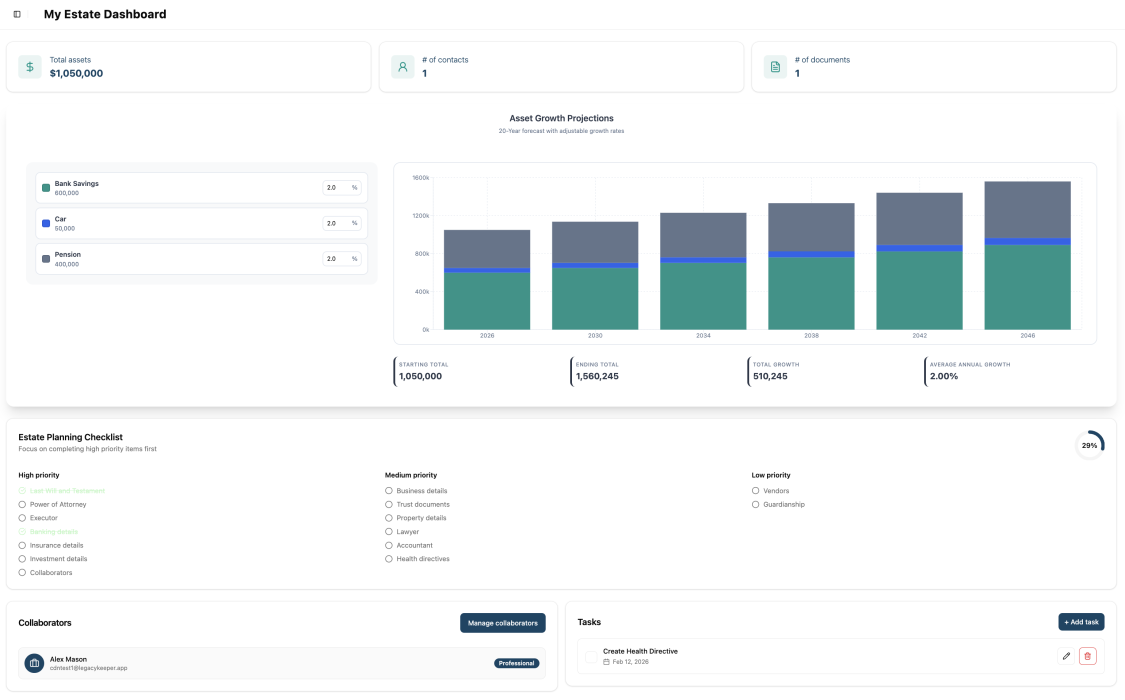
Establishing an estate trust is an intricate process, leveraging the right tools and resources simplifies the journey. LegacyKeeper.app, offers a comprehensive suite of features designed to streamline trust administration and ensure the seamless execution of your wishes.
With LegacyKeeper, you can securely store and manage all your trust-related documents, ensuring your beneficiaries have easy access to the information they need. The platform’s intuitive interface and robust collaboration tools enable seamless sharing.
In conclusion, an estate trust offers benefits that extend beyond financial management. From preserving privacy and minimizing conflicts to facilitating charitable giving and ensuring business continuity, a well-structured trust is a valuable tool that safeguards your legacy and provides peace of mind for you and your loved ones. By partnering with experienced professionals and leveraging the power of innovative platforms like LegacyKeeper, you can rest assured that your wishes will be honored and your assets will be managed with the utmost care and diligence.
References How Can I Benefit From An Estate Trust?
- Charles Schwab: We Asked Our Experts: Do You Need a Trust?
- Nerd Wallet: What Is a Trust? Definition, Account Types and Benefits
- Bank of America: Understanding Trusts
- Smart Assets: 6 Benefits of Using A Trust Instead Of A Will
- TIAA: What Is A Trust And Why Do I Need One?
- Legacy Keeper: Unlocking the Advantages Of Trusts: Maximizing Benefits with $200,000 Annual Income


Leave a Reply