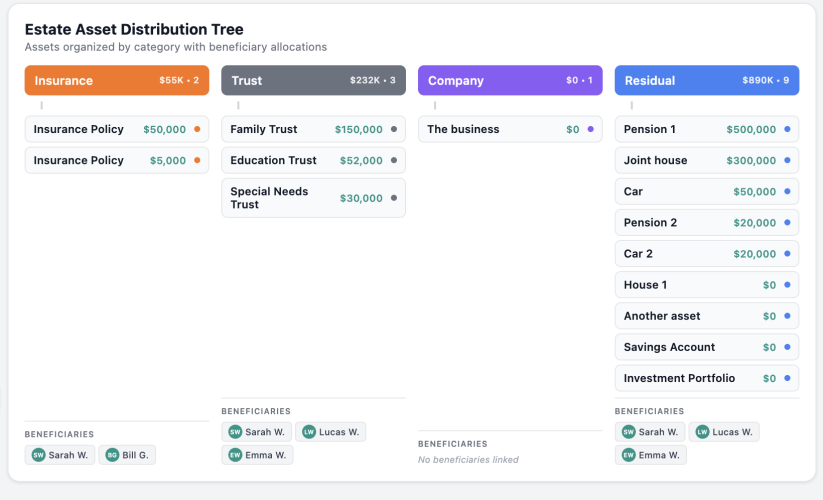
Legacy Keeper’s Asset Ownership & Beneficiaries feature puts estate beneficiaries first. As a result, the tool quickly and clearly shows who receives each asset and under what conditions. Advisors no longer waste hours compiling data or reviewing spreadsheets to find beneficiary designations, allocations, and tax impacts. Instead, Legacy Keeper’s AI handles these tasks in seconds. It creates an interactive distribution tree that displays every holding by type: insurance, trusts, company assets, and residual estate. Additionally, the tree highlights beneficiary relationships for each asset. Advisors and clients instantly see how estate beneficiaries are named, what each will receive, and where designations are missing or outdated. Automated categorization, tax and probate analysis, and AI-generated discussion points help advisors focus on beneficiaries, reduce tax exposure, and accelerate wealth transfer. Ultimately, this approach cuts administrative work by up to 50% and helps secure legacies faster.
What Is the Asset Ownership & Beneficiaries Feature?
The Asset Ownership & Beneficiaries feature gives advisors a clear, simple view of client holdings. Specifically, it organizes assets into four categories: Insurance, Trust, Company, and Residual. With this structure, it is easy to see how and when beneficiaries will receive their inheritances. For example, insurance pays out quickly and avoids probate, so beneficiaries get funds fast. Meanwhile, trusts protect assets and let you tailor distributions for specific heirs. Company ownership supports smooth business succession and shows which beneficiaries inherit business interests. In contrast, the Residual category points out assets exposed to tax and probate, so you can restructure them to maximize what beneficiaries receive. As a result, advisors can now spot and act on the best strategies for estate beneficiaries with ease.
Legacy Keeper’s AI puts estate beneficiaries at the center of every decision. For example, picture an estate worth $4 million with 18 different assets. In just 12 seconds, the system maps the entire ownership structure. It shows which beneficiaries are named, which assets lack designations, and how these choices affect probate and taxes. Consequently, advisors can quickly analyze ownership, beneficiary designations, and tax exposure through the beneficiaries’ lens. The tool provides clear discussion points and practical recommendations to maximize what beneficiaries receive. Each asset category shows total value and number of holdings. In addition, individual assets display their value and status. Beneficiary links are easy to track, so everyone can see exactly how wealth will transfer.
The Problem This Feature Solves
Financial advisors face tough challenges when analyzing client estates for beneficiaries. In the past, traditional methods forced advisors to manually list assets and beneficiary designations. As a result, many struggle to match assets with the right estate beneficiaries. Calculating probate exposure and tax impact with spreadsheets takes time. Advisors often spend more than 20 hours per client each year on these tasks. Moreover, delays and inefficiencies can add over $1,500 in probate costs per case—money taken from beneficiaries. This fragmented process hides gaps, conflicts, and missed beneficiary opportunities. Consequently, assets become public, and beneficiaries may wait 6 to 12 months for funds. Without a clear way to visualize ownership and beneficiary details, advisors find it hard to warn about risks and suggest strategies that protect beneficiaries.
How the Feature Solves These Challenges
Legacy Keeper’s agent-first architecture streamlines estate analysis. Therefore, advisors plan faster and more accurately. The feature solves advisor challenges in three key ways:
Visual Asset Categorization: The distribution tree organizes assets by ownership type and shows the total value in each category. As a result, advisors and clients see at a glance what each estate beneficiary stands to receive. The tool highlights which assets avoid probate (insurance, trusts) and which do not (residual estate), so everyone can understand the impact. This helps ensure beneficiaries get their inheritances quickly. Furthermore, advisors can prompt clients with questions like, ‘Are you comfortable with 42% of your assets facing probate? How does this affect your beneficiaries?’ These clear visuals turn numbers into meaningful discussions about beneficiary outcomes.
Intelligent Analysis Engine: The AI reviews every asset and finds specific opportunities for beneficiaries. Next, it generates clear discussion points on probate exposure, missing details, and ways to help beneficiaries. Advisors see calculated figures and direct recommendations, such as adding or updating beneficiary designations, using trusts for certain heirs, and designating homes to maximize tax exemptions for beneficiaries. The engine is continually updated with jurisdictional rules and legal requirements, ensuring that all recommendations comply with current laws and regulations. Moreover, it actively incorporates real-time updates on changes in estate planning laws and tax codes, providing advisors with compliance safeguards that build trust. Advisors and clients know that all recommendations protect beneficiaries’ interests and comply with the law. This assurance fosters confidence that beneficiaries will receive their inheritances efficiently and with reduced risk.
How to Use the Asset Ownership & Beneficiaries Feature
Start by entering your client’s assets. Include real estate, bank accounts, investments, insurance policies, retirement accounts, and business interests. Record the ownership type and current value for each asset. Enter data manually or import from compatible systems to save time. Integration with advisor platforms speeds up onboarding and portfolio review.
- Scan Key Estate Planning Documents: Upload essential documents like wills, trusts, insurance policies, and beneficiary forms. Legacy Keeper’s AI extracts key details—asset descriptions, ownership, beneficiaries, executors, and distribution instructions. This saves hours of manual entry and captures every detail. Legacy Keeper uses strong encryption during uploads to protect client data and keep it confidential.
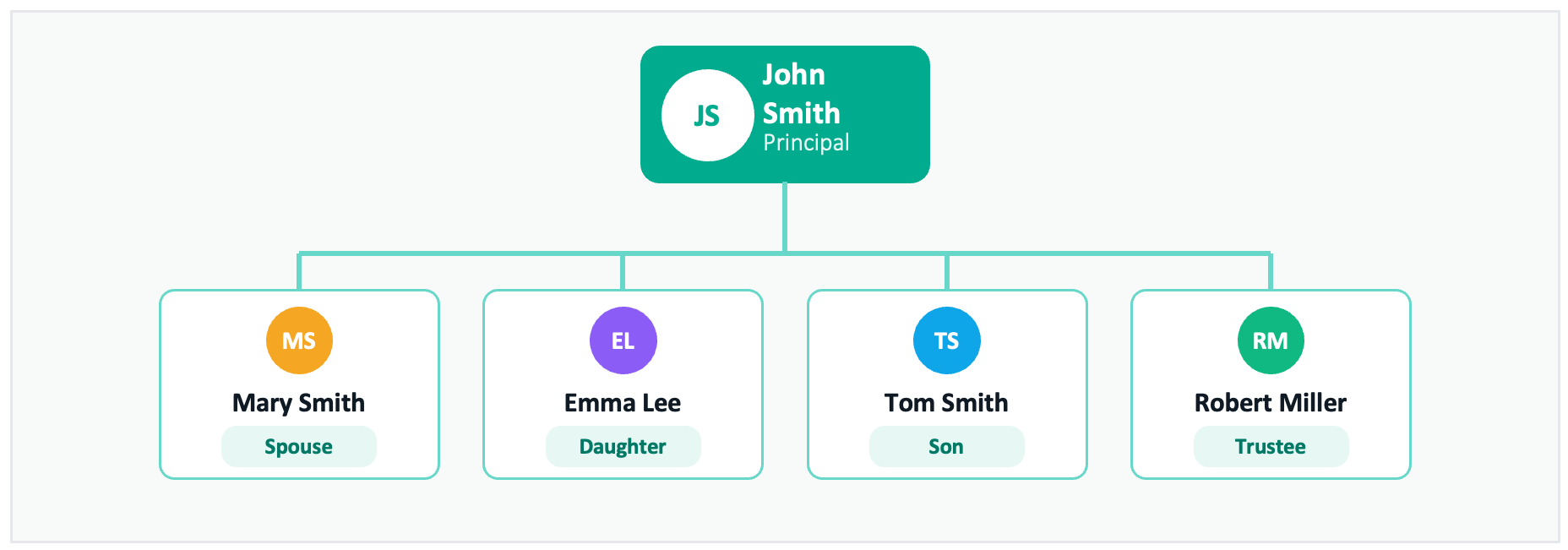
- Add Beneficiary Details: Enter each beneficiary for every asset. The system maps these links in the distribution tree. It flags assets without beneficiary designations, helping everyone avoid costly mistakes that could harm heirs.
- Review and Reconcile: Compare AI-extracted information with manual entries and client details. Legacy Keeper flags mismatches, such as conflicting beneficiaries or outdated values, to ensure that all estate details align with client wishes. This step is vital. A wrong beneficiary could cost heirs up to 1.5% in extra fees. By tying the process to real risks, advisors see why accuracy matters.
- Review the Distribution Tree: Check the visual layout to see how assets are structured. Note the total value in each category and spot any concerns.
- Generate AI Analysis: Receive AI-powered discussion points, recommendations, and a list of needed documents or information.
- Address Information Gaps: Review the list of missing information, such as purchase prices, acquisition dates, and beneficiary forms. Gather this data to finish tax and probate calculations.
- Prepare Client Deliverables: Use discussion points and recommendations to create a ‘Future-Proofing Roadmap’ for each client. This report clearly shows the estate structure, risks, and recommendations. Present it as a strategic story, not just a data list, to engage clients and show your value. Set clear rules about client access to their estate data. Specify if clients can use Legacy Keeper’s platform directly or only get updates from you. This transparency helps clients know how they will receive information.
Summary
The Asset Ownership & Beneficiaries feature changes how advisors analyze and optimize estates. Visual categorization, automated probate and tax analysis, and AI recommendations help advisors find opportunities in minutes, not hours. Clients see less probate, lower taxes, and faster wealth transfer. Advisors deliver insights quickly. Legacy Keeper turns estate planning from paperwork into a streamlined process.
Estate Beneficiaries Agent FAQ
Q: What asset types can I track in the system?
A: The system supports comprehensive asset tracking, including real estate, bank accounts, investment portfolios, retirement accounts , insurance policies, trust holdings, business interests, vehicles, and personal property. Each asset can be assigned to the appropriate distribution category.
Q: How does the system calculate probate exposure?
A: Legacy Keeper calculates probate exposure based on the value of assets that will pass through the estate (those without designated beneficiaries or joint ownership). The system applies jurisdiction-specific probate fee rates to provide accurate fee estimates and identifies specific assets contributing to this exposure.
Q: Can the AI identify missing information?
A: Yes. The AI analysis identifies specific gaps in client data that prevent comprehensive planning, such as missing purchase prices for capital gains calculations, unknown beneficiary designations, and unclear asset locations. This helps advisors gather the precise information needed for complete recommendations.
Q: How do the AI-generated discussion points help with client conversations?
A: The discussion points provide specific, data-driven talking points for client meetings. Rather than presenting raw numbers, advisors receive context-rich analysis that explains why certain structures create risk, what the financial impact is, and which strategies can address each concern. This enables more productive and focused planning conversations.

Leave a Reply