LegacyKeeper’s new AI Life Insurance Agent Report helps financial advisors quickly analyze and optimize life insurance for estate planning. Clients want complete solutions. This AI-first feature makes LegacyKeeper a leader in smart, life-insurance–focused planning.
The AI Life Insurance Agent Report uses advanced artificial intelligence to create interactive visuals for every part of a life insurance policy. It shows death benefits, riders, illness coverage, and cash value at a glance. The AI engine goes further. It checks whether coverage is sufficient, identifies outdated beneficiaries, flags tax issues, and shows coverage gaps. Advisors get clear, quick, and actionable guidance to protect client legacies.
What Is the Insurance Report Feature?
LegacyKeeper’s AI Agent gives advisors a simple, interactive agent. Advisors see every insurance policy benefit in clear categories. This makes conversations about coverage fast and confident. Picture this: You review a client’s life insurance. In seconds, the AI finds an outdated beneficiary, spots a coverage gap, and suggests a tax fix—all in one place.
This feature is powerful because it connects directly with LegacyKeeper’s AI agent system. The system does more than show policy details. It checks coverage, reviews beneficiaries, examines ownership, and ties everything to estate goals. The summary shows the start date, premium, policy status, value, and insurance liabilities. Advisors see exactly how each policy fits the estate plan.
The Problem This Feature Solves
Financial advisors struggle to see how life insurance fits estate plans. Old methods mean reading long documents and using spreadsheets. Coordinating insurance with estate plans takes too much time. This messy process makes it hard to check if coverage meets tax, income, and beneficiary needs.
Many clients have old beneficiary designations, tax issues, or hidden gaps in coverage. Without a clear system, advisors can’t easily spot problems or optimize policies. This makes it hard to give clients the advice they need to protect their legacy.
How the Feature Solves These Challenges
LegacyKeeper’s AI-first architecture automates even the most complex aspects of insurance analysis—solving advisor challenges with three transformative capabilities:
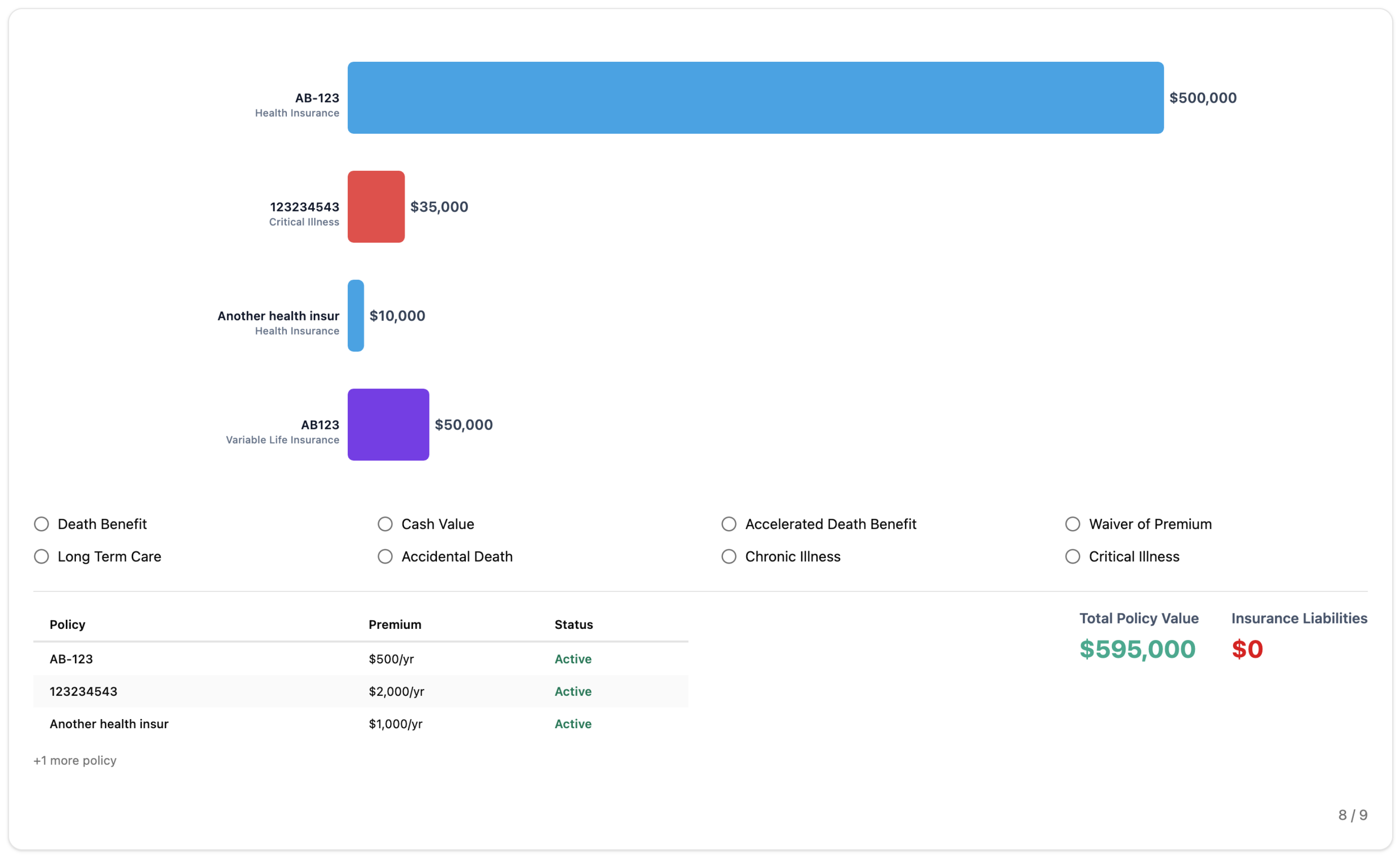
Visual Policy Breakdown: The Insurance Report sorts benefits by category and shows values in a simple bar chart. Advisors quickly see coverage types. This helps focus conversations and assess whether the policy aligns with client goals.
Intelligent Coverage Analysis: The AI checks insurance and estate documents together. It creates clear discussion points about coverage, beneficiaries, ownership, and gaps. Each point provides specific advice tailored to the client’s family and goals.
Actionable Recommendations: The system gives a clear list of next steps. These include assessing insurance needs, reviewing beneficiaries, considering additional coverage, and clarifying ownership to achieve better tax results.
How to Use the Life Insurance Report Feature
Get started with the Insurance Report in a few steps:
- Scan Policy Documents: Upload policy documents and forms. The AI automatically pulls out all benefits, riders, cash values, and beneficiaries.
- Input Life Insurance Policy Information: Enter your client’s policy details. Add type, carrier, death benefit, premium, and start date.
- Review and Reconcile: Check the AI’s data against what you entered. The system flags any differences.
- Review the Insurance Report: See how benefits are spread across categories. Note policy value, premium, and liabilities at a glance.
- Generate AI Analysis: Click to get discussion points, recommendations, and a planning checklist.
- Prepare Client Deliverables: Use the AI’s points to make simple reports. Show coverage, gaps, and next steps.
Summary: AI Life Insurance Analysis Redefined
The AI Life Insurance Agent Report changes estate planning for advisors. You get clear visuals, smart analysis, and direct advice. LegacyKeeper helps you protect client legacies with better plans. With this tool, you deliver stronger insights and more value—fast. Clients gain peace of mind, knowing their life insurance fits their goals. Try LegacyKeeper’s Insurance Report today and see how AI-first planning transforms your practice.
Life Insurance Report FAQ
Q: What life insurance policy types can I analyze in the system?
A: The system supports comprehensive analysis of life insurance policies—including Universal Life, Whole Life, Term Life, and Variable Life. Each policy can be broken down by its component benefits, including death benefits, living benefit riders, and cash value accumulation.
Q: How does the system calculate insurance liabilities?
A: LegacyKeeper calculates insurance liabilities based on factors that may reduce the net benefit to beneficiaries, such as outstanding policy loans, surrender charges, and potential tax implications. This helps advisors understand the true net value available to the estate.
Q: Can the AI identify coverage gaps beyond life insurance?
A: Yes. While the core focus is life insurance, the AI analysis also evaluates the client’s comprehensive protection picture and identifies gaps in disability, critical illness, and long-term care insurance. This ensures advisors can address all life insurance and related protection needs that impact estate preservation.
Q: How do the AI-generated life insurance discussion points help with client conversations?
A: The AI-generated discussion points provide specific, data-driven talking points for client meetings focused on life insurance. Rather than presenting raw policy numbers, advisors receive context-rich analysis that explains how insurance coverage aligns with estate goals, whether beneficiary designations coordinate with estate documents, and which strategies can address identified gaps in protection.
Q: What information do I need to get an accurate coverage analysis?
A: For accurate analysis, you need policy current beneficiary designations, benefit values, premium payment schedules, and details about any policy loans. The AI will identify specific gaps in policy data and help you gather the precise information needed for complete recommendations.

Leave a Reply