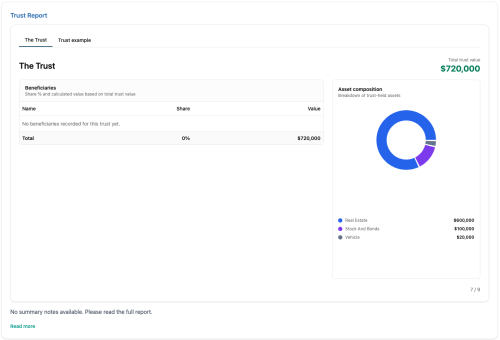
LegacyKeeper’s Trust Report feature transforms how financial advisors analyze and present Estate Planning Trust Strategies. AI-powered insights and visuals leverage trust to provide strategic recommendations. It shows grantors, trustees, beneficiaries, and trust assets in a clear layout. Visual mapping, automated document review, and AI insights help advisors spot funding gaps and verify beneficiary allocations fast. Advisors ensure each trust aligns with the client’s Estate Planning Trust goals. Clients benefit from less probate risk, more efficient wealth transfer, and greater confidence.
What Is the Trust Report Feature?
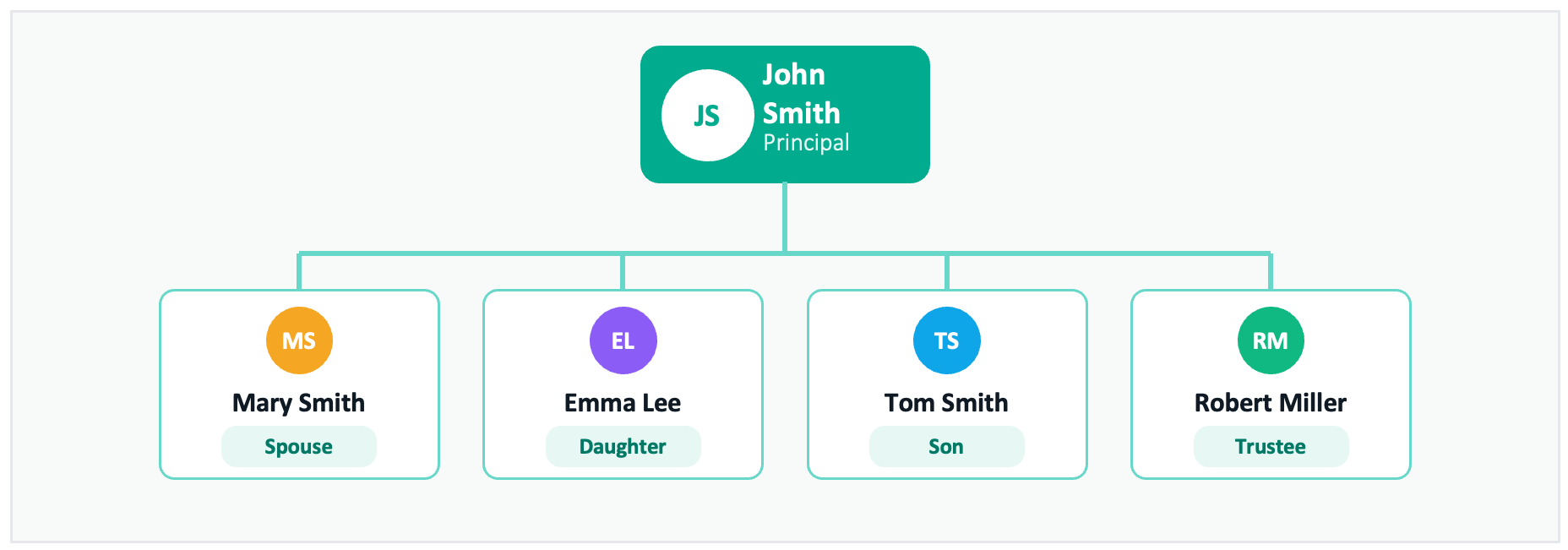
Trust Report is LegacyKeeper’s Estate Planning Trust analysis tool for financial advisors. It provides a simple diagram. Advisors see the Grantor, Trustees, Beneficiaries, and Trust Assets at a glance.
This feature stands out because it uses LegacyKeeper’s AI agent. Trust Report does more than display data. It analyzes Estate Planning Trust funding, beneficiary shares, asset categories, and how the trust fits into the bigger estate plan. Each visual element gives key details—trust type, date, total value, and shares for each beneficiary. Advisors get immediate, actionable insights for every Estate Planning Trust.
The Problem This Feature Solves
Financial advisors struggle to optimize Estate Planning Trusts. Manual reviews, spreadsheets, and checking designations across documents take too long. This fragmented process makes it hard to know whether Estate Planning Trusts are funded, whether beneficiary splits are correct, or whether the trust aligns with the rest of the estate plan.
Many clients have Estate Planning Trusts that are not fully funded. Assets in a client’s name often bypass the trust. This can mean probate, estate taxes, and delays. Without a clear visual of the Estate Planning Trust, advisors find it hard to explain gaps or recommend fixes.
How the Feature Solves These Challenges
LegacyKeeper’s agent-first architecture automates the most complex aspects of trust analysis, delivering three core capabilities that address advisors’ biggest challenges:
Visual Trust Mapping: Trust Report organizes Estate Planning Trust details in a simple diagram. Color coding shows roles and asset types. Advisors see the full Estate Planning Trust structure instantly.
Intelligent Funding Analysis: The AI reviews all client assets and checks if each belongs in the Trust. It flags unfunded trusts, calculates probate risk, and gives clear funding recommendations.
Actionable Recommendations: The system gives clear steps to improve the Estate Planning Trust. It suggests actions such as transferring real estate, updating beneficiaries, reviewing trustee succession, and ensuring trust documents align with the client’s wishes.
How to Use the Estate Planning Trust Report Feature
Start using Trust Report with these simple steps:
- Scan Trust Documents: Upload trust agreements and amendments. LegacyKeeper’s AI automatically extracts key data such as provisions, beneficiary names, distribution rules, and trustee powers.
- Input Trust Information: Enter client trust details—name, type, date, grantor, and trustees. List both primary and successor trustees for full visibility.
- Add Beneficiary Details: Name each beneficiary and set their share. The system adds these to the diagram and automatically calculates the amounts.
- Record Trust Assets: List all trust assets—securities, real estate, insurance, and more. Add current values and categories for a complete review.
- Review and Reconcile: Compare AI data to what you entered by hand. LegacyKeeper flags any mismatches.
- Generate AI Analysis: Click to get AI-generated talking points, funding advice, and a checklist for complete trust planning.
Conclusion: Unlock a New Era of Estate Planning with Trust Report
Trust Report sets a new standard for Estate Planning Trusts. Advisors get unmatched clarity and guidance. Visual mapping, automated analysis, and AI recommendations help optimize each trust and ensure proper funding. Advisors deliver better outcomes, reduce probate risk, and maximize wealth transfer for their clients.
Frequently Asked Questions
Q: What trust types can I analyze in the system?
A: The system supports comprehensive analysis of various trust types, including Revocable Living Trusts, Irrevocable Trusts, Special Needs Trusts, Testamentary Trusts, and Family Trusts. Each trust is displayed in the visualization with its specific type, establishment date, and total value.
Q: How does the system identify unfunded or underfunded trusts?
A: LegacyKeeper compares assets held within the trust against the client’s complete asset inventory. The AI identifies assets that remain in the client’s personal name but could be transferred to the trust, calculating the probate exposure and fees associated with unfunded portions.
Q: Can the AI identify missing trust documentation?
A: Yes. The AI analysis identifies specific gaps in trust documentation, such as missing trust amendments, outdated beneficiary designations, unclear trustee succession plans, and incomplete asset transfer records. This helps advisors gather the precise documents needed for a complete trust analysis.
Q: How do the AI-generated discussion points help with client conversations?
A: The discussion points provide specific, data-driven talking points for client meetings. Rather than presenting raw trust data, advisors receive context-rich analysis that explains whether the trust is properly funded, how beneficiary allocations align with other estate documents, and which strategies can address identified gaps in trust planning.

Leave a Reply