
In the competitive financial services landscape, mastering the art of building a financial advisor sales pipeline is crucial for advisors looking to grow their practice and better serve clients. But what exactly does this entail, and how can you create an effective system that nurtures prospects and converts them into loyal clients? Let’s dive into the world of financial advisor sales pipelines and uncover strategies to help you thrive in this dynamic field.
Are you ready to transform your approach to client acquisition and retention? By the end of this comprehensive guide, you’ll have a clear roadmap for constructing a sales pipeline that attracts your ideal clients and streamlines your business operations. Let’s begin this journey to elevate your advisory practice to new heights.
Understanding the Fundamentals of a Financial Advisor Sales Pipeline
At its core, a sales pipeline for financial advisors visually represents the journey a prospect takes from initial contact to becoming a client. It’s a strategic tool that allows you to track potential clients as they move through various stages of engagement with your firm. By implementing a well-structured pipeline, you gain valuable insights into your sales process, helping you forecast revenue and optimize client acquisition efforts.
Think of your sales pipeline as a funnel that guides prospects through carefully crafted touchpoints. Each stage represents a milestone in the relationship-building process, from awareness and interest to consideration and decision-making. By mapping out these stages, you create a clear path for nurturing leads and converting them into satisfied clients.
A thoughtfully designed pipeline offers numerous benefits:
- Improved organization and tracking of potential clients
- Enhanced ability to prioritize leads and allocate resources effectively
- Greater visibility into the health of your business development efforts
- Increased efficiency in follow-ups and relationship management
- Better alignment of marketing and sales activities
Remember, your sales pipeline is not a static entity. It should evolve as you gain insights into your target market and refine your approach. Regularly analyzing and optimizing your pipeline will ensure it remains a powerful tool for growing your advisory practice.
Defining Your Ideal Client Profile
Before you can build an effective sales pipeline, you must have a crystal-clear understanding of your ideal client. This profile will serve as the foundation for all your marketing and sales efforts, ensuring you attract prospects who are the best fit for your services.
Start by analyzing your current client base. Look for common characteristics among your most successful and enjoyable client relationships. Consider factors such as:
- Age range and life stage
- Professional background and income level
- Investment goals and risk tolerance
- Communication preferences and decision-making style
- Values and interests
Once you’ve identified these key traits, create a detailed persona representing your ideal client. This fictional character should embody the qualities you’re looking for in new prospects. Please give them a name, backstory, and specific financial challenges they face.
With your ideal client profile, you can tailor your marketing messages, service offerings, and sales approach to resonate with this target audience. This focused strategy will help you attract higher-quality leads and improve conversion rates throughout the sales pipeline.
Mapping Out Your Sales Pipeline Stages
Now that you have a clear picture of your ideal client, it’s time to outline the stages of your sales pipeline. While the specific steps may vary depending on your business model and target market, a typical financial advisor sales pipeline might include the following stages:
- Lead Generation: This is where potential clients first enter your pipeline. They may come from referrals, online searches, or marketing campaigns.
- Initial Contact: The first interaction with a prospect, often through a phone call, email, or website inquiry.
- Qualification: Assessing whether the prospect is a good fit for your services and vice versa.
- Discovery Meeting: An in-depth conversation to understand the prospect’s financial situation, goals, and concerns.
- Proposal Presentation: Outline your recommended services and how they address the prospect’s needs.
- Follow-up and Negotiation: Address any questions or concerns and finalize the terms of engagement.
- Closing: The prospect agrees to become a client and signs the necessary agreements.
- Onboarding: Welcome the new client and begin implementing their financial plan.
For each stage, define specific actions and criteria for moving a prospect to the next level. This clarity will help you and your team stay organized and ensure consistent follow-through with every potential client.
Implementing Technology to Support Your Pipeline
In today’s digital age, leveraging technology is crucial for managing an efficient sales pipeline. Customer Relationship Management (CRM) software is the backbone of many successful advisory practices. A sound CRM system allows you to:
- Store and organize client and prospect information
- Track interactions and set reminders for follow-ups
- Automate routine tasks and communications
- Generate reports and analyze pipeline performance
When choosing a CRM, look for one that integrates well with your existing tools and offers features specifically designed for financial advisors. Popular options include Redtail, Wealthbox, and Salesforce Financial Services Cloud.
In addition to a CRM, consider implementing:
- Marketing automation software to nurture leads with targeted content
- Calendar scheduling tools to streamline appointment booking
- Document signing platforms for seamless agreement execution
- Analytics tools to measure the effectiveness of your pipeline strategies
Remember, the goal of technology is to enhance, not replace, the personal touch that is so crucial in financial advisory relationships. Use these tools to free up time for meaningful client interactions and strategic business development.
Crafting Compelling Lead Magnets and Content
To attract prospects into your sales pipeline, you must offer value that addresses their pain points and demonstrates your expertise. This is where lead magnets come into play. A lead magnet is a free resource offered in exchange for contact information, typically an email address.
Effective lead magnets for financial advisors might include:
- E-books on retirement planning or investment strategies
- Webinars addressing common financial concerns
- Financial calculators or assessment tools
- Checklists for significant life events (e.g., marriage, buying a home)
- Video courses on personal finance basics
When creating lead magnets, focus on providing actionable insights that showcase your knowledge and approach to financial planning. The goal is to give prospects a taste of your value as their advisor.
Beyond lead magnets, develop a content strategy that supports each stage of your sales pipeline. This might include:
- Blog posts addressing frequently asked questions
- Case studies highlighting client success stories
- Newsletters featuring market insights and planning tips
- Social media content that engages and educates your audience
By consistently delivering valuable content, you position yourself as a trusted resource and keep your firm top-of-mind as prospects move through the decision-making process.
Nurturing Leads Through Multi-Channel Engagement
Once a prospect enters your pipeline, the nurturing process begins. This is where you build trust, demonstrate value, and guide the potential client toward a decision to work with you. Effective lead nurturing requires a multi-channel approach that meets prospects where they are most comfortable.
Consider the following strategies:
- Email Campaigns: Develop a series of automated emails that provide relevant information based on the prospect’s interests and stage in the pipeline.
- Social Media Engagement: Share insights, respond to comments, and participate in relevant discussions to stay connected with your audience.
- Personal Follow-ups: Schedule periodic phone calls or video chats to address questions and deepen the relationship.
- Educational Events: Host webinars or in-person seminars on topics that resonate with your target market.
- Direct Mail: Send personalized letters or informational packets to stand out in an increasingly digital world.
- Retargeting Ads: Use online advertising to stay visible to prospects who have shown interest in your services.
The keys to successful nurturing are consistency and relevance. Tailor your communications to address each prospect’s specific needs and concerns, and maintain a regular cadence of touchpoints without overwhelming them.
Optimizing Your Discovery Meeting Process
The discovery meeting is a critical juncture in your sales pipeline. It’s your opportunity to dive deep into a prospect’s financial situation, understand their goals, and begin building a meaningful relationship. To make the most of this crucial interaction:
- Prepare thoroughly: Review any information you’ve gathered about the prospect and prepare a list of thoughtful questions.
- Set clear expectations: Outline the agenda and objectives for the meeting in advance.
- Listen actively: Focus on understanding the prospect’s needs and concerns rather than pitching your services.
- Use visual aids: Employ charts, graphs, or financial planning software to illustrate concepts and engage the prospect.
- Address pain points: Demonstrate how your services can solve specific challenges the prospect is facing.
- Establish the next steps: Clearly define the follow-up process and set a timeline for moving forward.
Remember, the goal of the discovery meeting is not to close the sale but to build trust and determine if there’s a good fit between your services and the prospect’s needs. Be prepared to guide the conversation toward a proposal if appropriate or to disengage gracefully if it’s clear you’re not the right advisor for their situation.
Crafting Compelling Proposals and Presentations
Once you’ve identified a qualified prospect and conducted a thorough discovery process, it’s time to present your proposed solution. Your proposal should be tailored to the potential client’s specific needs and goals, clearly demonstrating the value you can provide.
Key elements of an effective proposal include:
- A summary of the prospect’s current financial situation and objectives
- Your recommended strategies and services
- The expected outcomes and benefits of working with you
- A clear explanation of your fee structure and investment approach
- Next steps for moving forward with the engagement
When presenting your proposal, focus on the benefits rather than just the features of your services. Use storytelling techniques to illustrate how you’ve helped similar clients achieve their goals. Be prepared to address objections and questions, and have supporting materials to reinforce your recommendations.
Consider using technology to enhance your presentation, such as interactive financial planning software or video conferencing tools for remote meetings. The goal is to make the proposal process engaging, informative, and persuasive.
Mastering the Art of Follow-Up and Closing
The follow-up stage is where many advisors falter in their sales pipeline. Consistent, thoughtful follow-up is crucial for moving prospects toward a decision. Develop a systematic approach to staying in touch without being pushy:
- Set reminders in your CRM for scheduled follow-ups
- Provide additional resources or insights related to the prospect’s specific situation
- Address any concerns or questions that arose during the proposal stage
- Offer a clear call-to-action at each touchpoint
When it comes to closing, timing is everything. Look for signals that the prospect is ready to move forward, such as increased engagement or specific questions about implementation. Be prepared to overcome common objections and articulate the value of taking action now rather than delaying.
Remember, the closing process should feel like a natural progression of the relationship you’ve been building. If you’ve done your job well throughout the pipeline, the prospect should be easily able to make the decision to work with you.
Implementing a Robust Onboarding Process
Once a prospect becomes a client, the onboarding process begins. This critical phase sets the tone for the advisory relationship and can significantly impact client retention. A well-designed onboarding process should:
- Welcome the new client and reinforce their decision to work with you
- Clearly outline the next steps and what they can expect
- Gather all necessary information and documentation
- Introduce the client to your team and support systems
- Begin implementing the agreed-upon financial strategies
Consider creating a standardized onboarding checklist to ensure consistency and thoroughness. This might include:
- Sending a welcome package with key information and forms
- Scheduling an initial implementation meeting
- Setting up account access and communication preferences
- Conducting a risk tolerance assessment
- Establishing a regular review schedule
The goal is to make the transition from prospect to client as smooth and reassuring as possible. A positive onboarding experience sets the stage for a long-lasting, mutually beneficial relationship.
Measuring and Analyzing Pipeline Performance
You need to track key metrics and analyze performance regularly to improve your sales pipeline continually. Some important metrics to monitor include:
- Lead conversion rates at each stage of the pipeline
- Average time spent in each stage
- Overall pipeline velocity (how quickly leads move through the funnel)
- Client acquisition cost
- Lifetime value of clients
- Revenue generated from different lead sources
Use your CRM and other analytics tools to generate reports and visualize these metrics. Look for patterns and trends that can inform your strategy. For example, if you notice a high drop-off rate at a particular stage, you can focus on improving that part of your process.
Regularly review your pipeline with your team to identify bottlenecks, celebrate successes, and brainstorm improvements. Consider conducting post-mortem analyses on won and lost opportunities to gain insights into what works and what doesn’t.
Integrating Estate and Financial Planning into Your Pipeline
Estate planning is a crucial component of comprehensive financial advice, yet it’s often overlooked in the sales pipeline process. By incorporating estate planning discussions early in your client relationships, you demonstrate the breadth of your expertise and uncover additional opportunities to serve your clients.
Consider these strategies for integrating estate planning into your sales pipeline:
- Include estate planning questions in your initial discovery process
- Offer educational content on the importance of estate planning at various life stages
- Partner with estate planning attorneys to provide holistic solutions
- Develop case studies that showcase how estate planning fits into overall financial strategies
By proactively addressing estate planning, you position yourself as a comprehensive advisor who considers all aspects of a client’s financial life. This approach can lead to deeper, more valuable relationships and additional revenue streams for your practice.
Leveraging Legacy Keeper for Enhanced Client Relationships and Onboarding
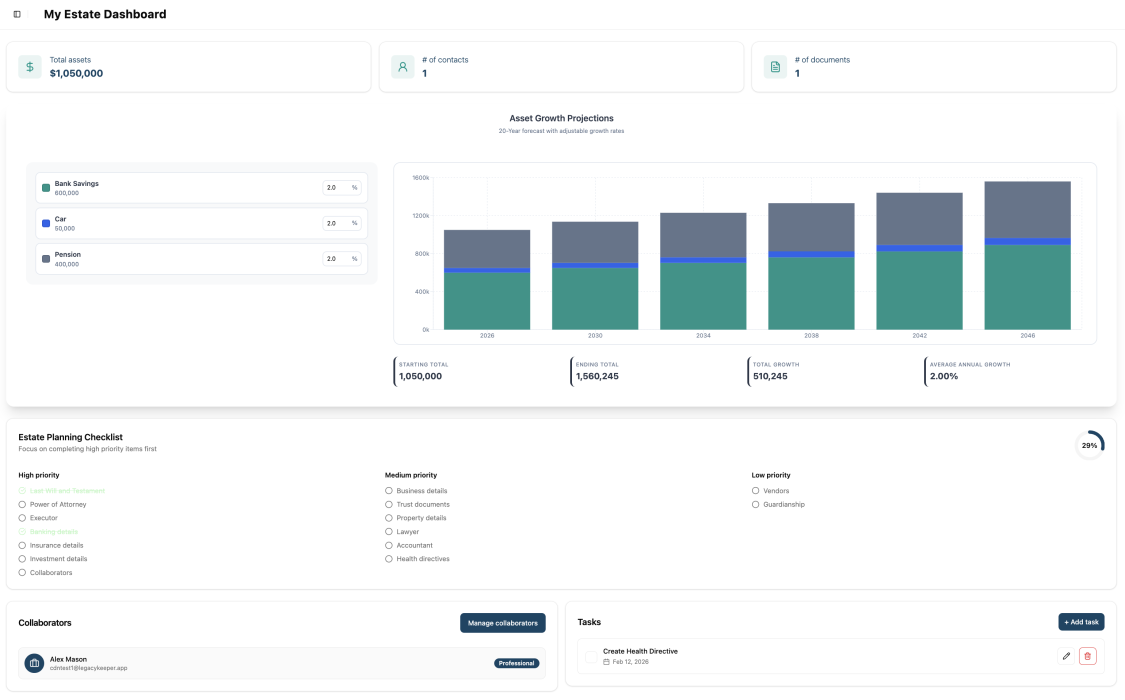
Tools like Legacy Keeper can add significant value to your sales pipeline and client relationships in estate and financial planning. Legacy Keeper is a digital platform that helps individuals organize and securely store important information, documents, and personal memories for future generations. The document intelligence automatically enters data from key financial documents to map estate assets and contacts.
By introducing Legacy Keeper to your clients and prospects, you:
- Demonstrate your commitment to their long-term well-being and family legacy
- Provide a tangible tool that complements your estate planning services
- Create opportunities for deeper conversations about estate planning and wealth transfer
- Differentiate your practice from competitors who focus solely on investment management
Consider offering Legacy Keeper as part of your onboarding process or as a value-added service for existing clients. This innovative approach to legacy planning can strengthen your relationships and position you as a forward-thinking advisor who goes beyond traditional financial planning.
In conclusion, building an effective sales pipeline for your financial advisory practice requires a strategic approach, consistent effort, and a willingness to adapt. By implementing the strategies outlined in this guide and leveraging tools like Legacy Keeper, you can create a robust system for attracting, nurturing, and retaining ideal clients. Remember, the most successful pipelines prioritize the client’s needs and deliver genuine value at every relationship stage.
References: Financial Advisor Sales Pipeline
- https://emoneyadvisor.com/blog/https://emoneyadvisor.com/blog/how-to-build-a-sales-pipeline-from-scratch-as-an-advisor/how-to-build-a-sales-pipeline-from-scratch-as-an-advisor/
- https://www.xyplanningnetwork.com/advisor-blhttps://www.xyplanningnetwork.com/advisor-blog/how-to-build-a-sales-pipeline-for-your-financial-planning-firmog/how-to-build-a-sales-pipeline-for-your-financial-planning-firm
- https://smartasset.com/advisor-https://smartasset.com/advisor-resources/financial-advisor-sales-funnelresources/financial-advisor-sales-funnel
- https://legacykeeper.app/2024/11/08/estatehttps://legacykeeper.app/2024/11/08/estate-planning-for-financial-advisors/-planning-for-financial-advisors/

Leave a Reply