The Legacy Goals & Relationships feature in LegacyKeeper revolutionizes estate planning for financial advisors, delivering a powerful blend of knowledge, efficiency, and value. With advanced AI at its core, this innovative tool enables advisors to seamlessly capture and visualize client goals. Transforming complex estate conversations into actionable strategies. Advisors gain a dynamic, interactive family tree that not only maps client relationships but also provides real-time, AI-driven recommendations tailored to estate intentions and beneficiary details. By automating document scanning, intelligent data reconciliation, and report generation, LegacyKeeper empowers advisors to deliver more comprehensive, personalized estate planning guidance—saving time, reducing manual effort, and maximizing client outcomes.
What Is the Legacy Goals & Relationships Feature?
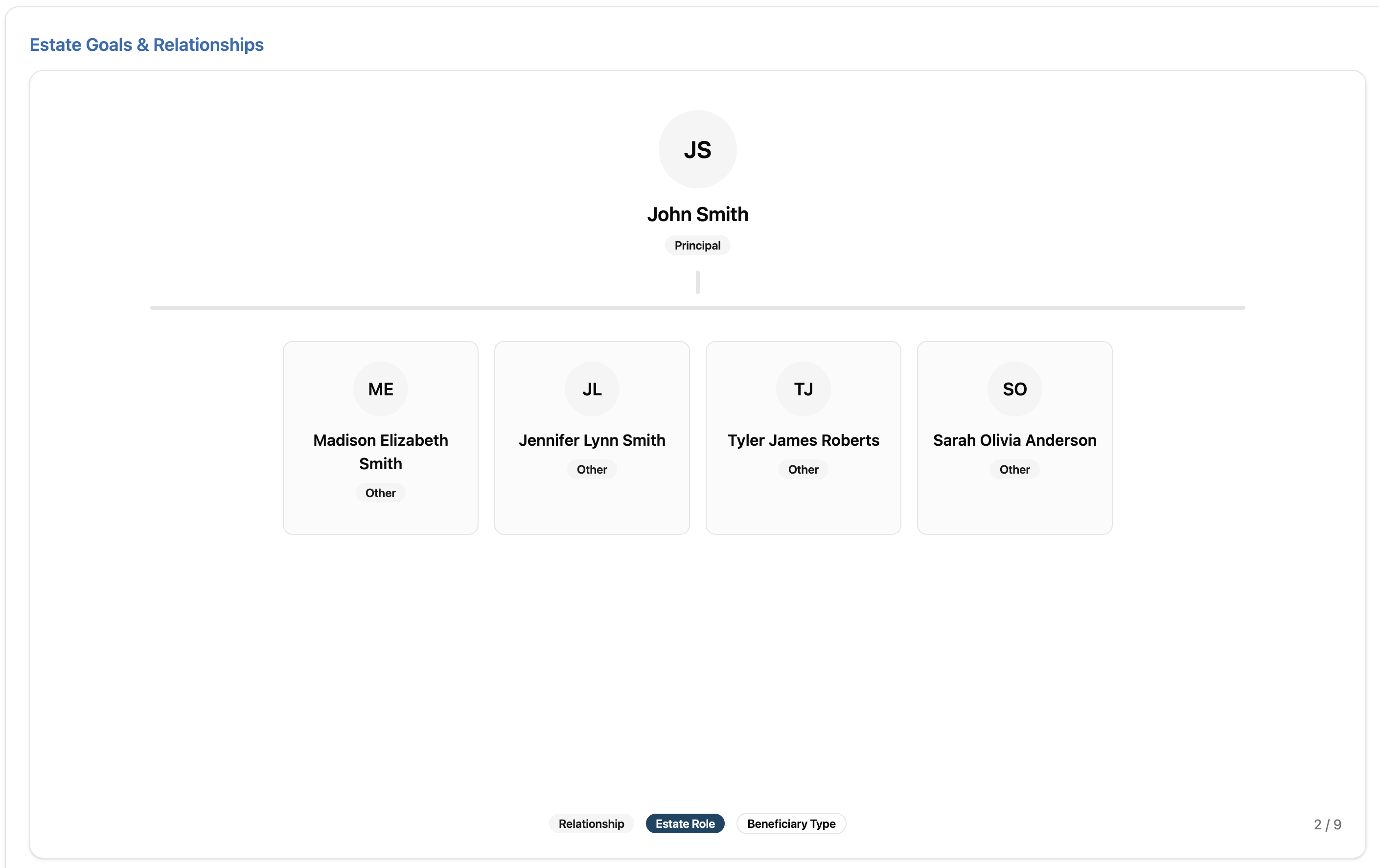
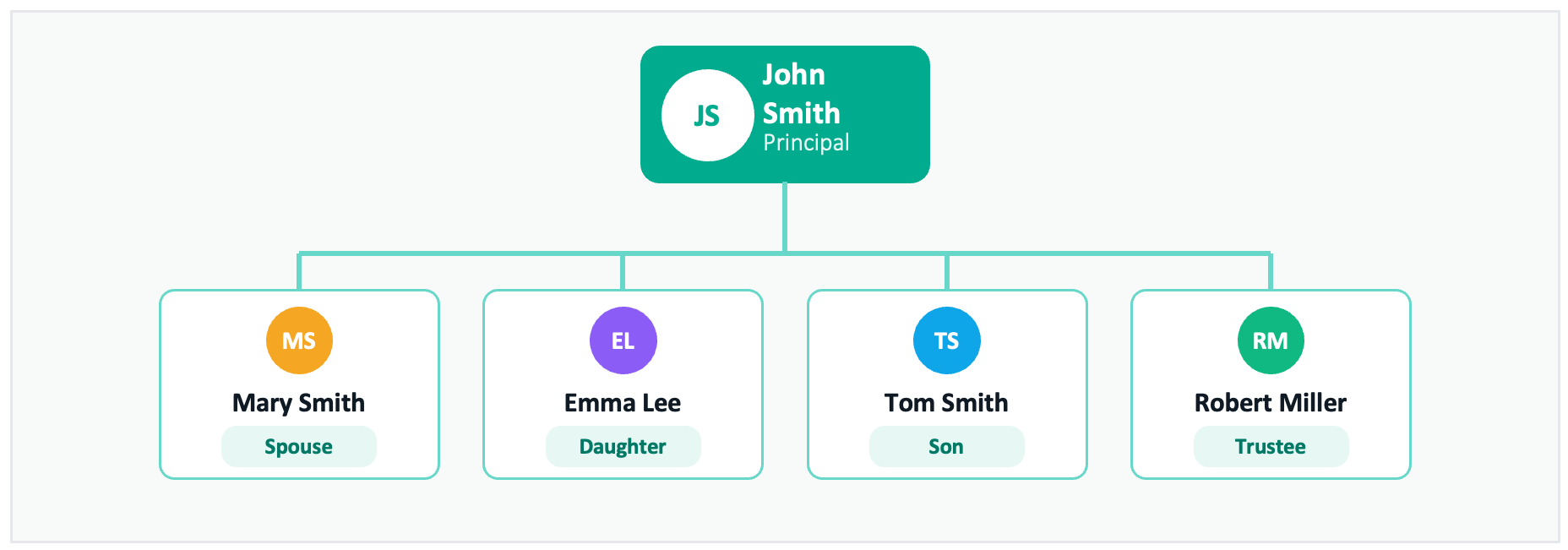
The Legacy Goals & Relationships feature is LegacyKeeper’s cornerstone visualization and reporting tool, designed specifically for financial advisors who provide estate planning support to their clients. At its core, the feature helps advisors capture and document client goals through an intuitive family tree diagram that places the principal (the person whose estate is being planned) at the top, with connected family members, beneficiaries, and other key contacts displayed below.
What truly sets this feature apart is its deep integration with LegacyKeeper’s cutting-edge AI agent infrastructure. Rather than simply displaying static information, the system intelligently analyzes relationships, legacy goals, generational intentions, and estate documents to produce actionable, highly relevant recommendations. Advisors can effortlessly view Relationship (family connections), Estate Role (executor, trustee, guardian), and Beneficiary Type (primary, contingent, charitable)—ensuring every legacy goal is accurately visualized and reflected across all estate planning documents. This multi-dimensional approach delivers unmatched clarity and confidence for both advisors and clients.
The Problem This Feature Solves
Financial advisors face significant challenges when helping clients articulate and document their legacy goals. Traditional approaches require hours of manual data entry, the review of physical documents, and the creation of relationship maps by hand. Without a systematic way to capture goals, advisors often struggle to see the full picture of a client’s estate, leading to missed optimization opportunities and potential conflicts between documents and stated intentions.
Additionally, estate planning conversations around legacy goals can be difficult to navigate. Clients may not clearly articulate their values, family dynamics, or what they want their legacy to accomplish across generations. Without a structured framework for capturing these legacy goals, advisors risk creating plans that don’t truly reflect what clients want to achieve for future generations.
How the Feature Solves These Challenges
LegacyKeeper’s agent-first architecture automates the most time-consuming aspects of capturing and analyzing legacy goals. The feature solves advisor challenges through three key capabilities:
Automated Document Processing: Advisors can scan last will and testament documents directly into the system. The AI automatically extracts contact information, beneficiary designations, asset details, and executor appointments, eliminating manual data entry and ensuring that legacy goals documented in existing wills are captured accurately.
Intelligent Reconciliation: LegacyKeeper offers the industry’s most comprehensive reconciliation process. The system compares extracted document data against client-provided legacy goals, flagging discrepancies and ensuring all estate details align with current intentions.
AI-Generated Reports: Based on a comprehensive view of legacy goals, relationships, and assets, the system automatically generates multi-slide reports with personalized recommendations. Advisors can then prompt and refine these reports to create truly bespoke client deliverables that reflect each client’s unique desires.
How to Use the Legacy Goals & Relationships Feature
Getting started with the Legacy Goals & Relationships feature involves these straightforward steps:
- Scan Existing Documents: Upload the client’s last will and testament. The AI will extract relevant data and automatically populate fields.
- Input Goals: Work with your client to answer detailed legacy questions within the platform. These questions help establish core values, family dynamics, and generational intentions that form the foundation of their legacy.
- Add Contacts and Relationships: Enter family members, beneficiaries, and other key individuals involved in the client’s legacy goals. Assign role labels such as Principal, Executor, Trustee, or Guardian to each contact.
- Review and Reconcile: Compare extracted information against manually entered legacy goals. Resolve any discrepancies to ensure accuracy between documented wishes and current intentions.
- Generate the Report: Click generate to create your multi-slide report. The system analyzes all inputs and produces tailored recommendations aligned with the client’s legacy goals.
- Refine with Prompts: Use natural-language prompts to adjust the report’s focus, add specific sections, or emphasize particular legacy goals and client concerns.
Summary
This marks a groundbreaking advancement in estate planning technology, fundamentally elevating how advisors transform client legacy goals into actionable, future-proof estate plans. With intelligent relationship mapping, seamless document automation, and AI-powered insights, LegacyKeeper enables advisors to deliver superior, client-centric guidance with unprecedented efficiency. This feature not only ensures plans are fully understood and meticulously documented but also empowers advisors to strengthen client trust, differentiate their practice, and deliver comprehensive estate planning services that set a new industry standard.
Frequently Asked Questions
Q: How does the system capture legacy details?
A: LegacyKeeper guides advisors through detailed legacy questions that capture core values, family dynamics, generational intentions, and specific wishes. These form the foundation for AI-generated recommendations and ensure estate plans reflect what clients truly want to accomplish.
Q: What document types can I scan into the system?
A: Currently, the system supports last will and testament, insurance policies, and account statement documents. Upload your client’s documents, and the AI will automatically extract contacts, beneficiaries, asset details, and appointed roles, cross-referencing them against stated legacy goals.
Q: Can I customize reports to emphasize specific legacy goals?
A: Yes. After generating the initial report, you can use natural language prompts to refine content, adjust focus areas, and emphasize particular legacy goals. This creates truly bespoke deliverables tailored to each client’s unique situation.
Q: What role labels are available for contacts?
A: The system supports comprehensive role labeling, including Principal, Executor, Trustee, Guardian, Power of Attorney, and various beneficiary types. You can assign multiple roles to a single contact as needed to fully document how each person fits into the client’s plan.
Q: How does the visualization help communicate legacy plans?
A: The family tree visualization provides a clear, shareable view of relationships and roles that clients easily understand. Toggle between Relationship, Estate Role, and Beneficiary Type views to explore how their legacy plan translates into concrete estate planning decisions during consultations.

Leave a Reply