When most people think about generational wealth, they picture investment portfolios, real estate empires, and trust funds passed down through families. These financial assets matter—but they’re only part of the story. The uncomfortable truth is that 70 percent of wealthy families lose their generational wealth by the second generation, and a staggering 90 percent lose it by the third [1]. If money alone were the key to building generational wealth that endures, these numbers would look very different.
Meanwhile, Ramsey Solutions’ National Study of Millionaires—the largest ever conducted, with over 10,000 participants—found that 79 percent of millionaires didn’t receive any inheritance [2]. They built their wealth from scratch through discipline, relationships, and intentional living. This tells us something profound: true generational wealth isn’t just about accumulating money. It’s about creating something that lasts beyond your lifetime.
Redefining Generational Wealth
The traditional view of generational wealth focuses almost exclusively on financial metrics: net worth, passive income, compound interest. These concepts matter, but they miss something essential. True generational wealth encompasses relationships, shared experiences, transmitted values, and the meaning you derive from life. A billion-dollar inheritance means nothing if the recipients are unprepared, disconnected, and unfulfilled.
Consider this: you can always earn more money, but you cannot earn more time. Every hour spent solely chasing financial gain is an hour not spent with the people who matter most. The most successful builders of generational wealth eventually realize that the question isn’t just how to accumulate assets—it’s how to build a wealthy life that inspires others to do the same.
What Billionaires Learn Too Late About Generational Wealth
When billionaires reflect on their lives, a common theme emerges that reshapes how we should think about generational wealth. Many regret working so hard and wish they had invested more in the people around them [3]. These aren’t complaints from unsuccessful people—these are insights from individuals who mastered the financial side of wealth and discovered its limitations.
Warren Buffett, one of the most successful investors in history, has said, “Success is really about being in balance with the people who matter most to you” [4]. This from a man worth over $100 billion. Bill Gates acknowledged regretting his previous workaholic lifestyle, telling graduates at Northern Arizona University, “Don’t wait as long as I did to learn this lesson. Take time to nurture your relationships” [5].
These reflections suggest that building generational wealth financially is only half the equation. The other half—creating generational wealth in relationships and values—is something many high achievers learn too late. No amount of money can buy back the dinners missed, the conversations cut short, or the friendships left to wither.
Experiences: The Hidden Asset in Generational Wealth
Any comprehensive approach to generational wealth must account for the value of shared experiences. Research consistently shows that experiences bring more lasting happiness than material purchases. Objects depreciate; memories appreciate. The trip you took ten years ago likely means more to you now than it did then. The relationships you’ve cultivated over decades become richer with each passing year.
Relationships are the compounding interest that no financial advisor discusses. While your investment portfolio grows at seven or eight percent annually, your meaningful experiences and deep relationships compound in ways that are not quantifiable. They shape identity, provide support during difficult times, and create the stories that define families for generations. Understanding generational wealth means recognizing that some of your most valuable assets don’t appear on any balance sheet.
Relationships: The Foundation of Lasting Generational Wealth
The Harvard Study of Adult Development, one of the longest studies on human happiness, followed participants for over 80 years. Its conclusion was simple but profound: good relationships keep us happier and healthier. Not wealth. Not fame. Not achievement. Relationships. The people who fared best were those who leaned into connections with family, friends, and community.
This finding should fundamentally reshape how we think about generational wealth. Financial security provides comfort and options, but it doesn’t offer meaning or a sense of belonging. The relationships that matter require presence, and presence requires time—the one resource that wealth cannot replenish. Yet in the pursuit of financial success, relationships are often the first casualty.
We tell ourselves we’ll reconnect later, after the next milestone, after the business stabilizes. But later has a way of never arriving. The most effective approach to building generational wealth includes deliberately protecting time for the people who matter, even when—especially when—business demands feel overwhelming.
Transmitting Generational Wealth Beyond Dollars
When families fail to discuss wealth openly—and studies show 64 percent disclose little to nothing about their finances to loved ones—they leave the next generation unprepared [1]. But the real preparation for receiving generational wealth isn’t just about money management. It’s about transmitting values, sharing wisdom, and modeling what a meaningful life looks like.
The conversations you have, the examples you set, and the time you invest in others—these are the true inheritance. Anyone serious about building generational wealth must recognize that financial literacy matters far less than life literacy. Teaching those around you how to live well, how to maintain relationships, and how to find meaning will serve them far longer than any trust fund.
Integrating Financial and Relational Generational Wealth
The goal isn’t to abandon financial wealth-building—it’s to integrate it with everything else that matters. The most successful people find ways to pursue career and financial goals while simultaneously investing in relationships and experiences. They set boundaries. They protect their time. They recognize that building true generational wealth requires a holistic approach.
This might mean taking the vacation even when work is busy, having the difficult conversation instead of avoiding it, or choosing presence over productivity in key moments. It means recognizing that your network of relationships isn’t just professionally valuable—it’s the foundation of generational wealth that money alone cannot create.
The True Legacy of Generational Wealth
A legacy isn’t measured in net worth. It’s measured in the depth of your relationships, the experiences you’ve shared, and the lives you’ve touched. It’s the friend who still calls you after thirty years. It’s the traditions that outlive you. It’s the values that echo through generations long after the money is spent. This is generational wealth in its most valid form.
When you think about building generational wealth, make sure you consider the whole picture. Build your financial foundation—but don’t stop there. Invest in the people around you. Prioritize experiences that create meaning. Protect time for what matters most.
In the end, the most significant generational wealth you can pass on isn’t financial—it’s your time, your attention, your presence, and the example of a life well-lived. That’s the legacy worth building.
———
Frequently Asked Questions About Generational Wealth
What is generational wealth?
Generational wealth refers to assets passed down from one generation to the next. While most people define it purely in financial terms—money, property, investments—true generational wealth also includes intangible assets like values, relationships, wisdom, and life skills that help future generations thrive.
Why do most families lose their generational wealth?
Research shows that 70 percent of wealthy families lose their wealth by the second generation, and 90 percent by the third. This happens primarily because families focus on transferring money without transferring the values, financial literacy, and life skills needed to maintain it. Additionally, 64 percent of families disclose little to nothing about their finances, leaving heirs unprepared.
How do I start building generational wealth?
Start by building a strong financial foundation through consistent saving, investing, and living below your means. But don’t stop there—invest equally in relationships and shared experiences. Have open conversations about money and values with your family. Model the behaviors you want future generations to adopt. Remember that 79 percent of millionaires built their wealth without any inheritance, proving that discipline and intentional living matter more than starting capital.
What is more critical for generational wealth: money or relationships?
Both matter, but relationships provide the foundation that makes financial wealth meaningful and sustainable. The Harvard Study of Adult Development, which followed participants for over 80 years, concluded that good relationships—not wealth or achievement—are the strongest predictor of happiness and health. Financial assets without strong family bonds often dissipate quickly, while strong relationships can help families rebuild wealth even after setbacks.
How can I pass on generational wealth without spoiling my heirs?
Focus on transmitting values and life skills alongside financial assets. Have honest conversations about money, work ethic, and what wealth means to your family. Involve heirs in financial decisions gradually so they learn responsibility. Consider structured inheritances that reward productive behavior. Most importantly, model the values you want them to embody—your example will teach them far more than any trust document.
What do billionaires regret most about building wealth?
Many billionaires report regretting the time they sacrificed with family and friends during their wealth-building years. Warren Buffett emphasizes that success is about balance with the people who matter most. Bill Gates has publicly stated he wishes he had learned earlier to nurture relationships. These insights suggest that even extraordinary financial success cannot compensate for neglected relationships.
———
How Legacy Keeper Supports Generational Wealth
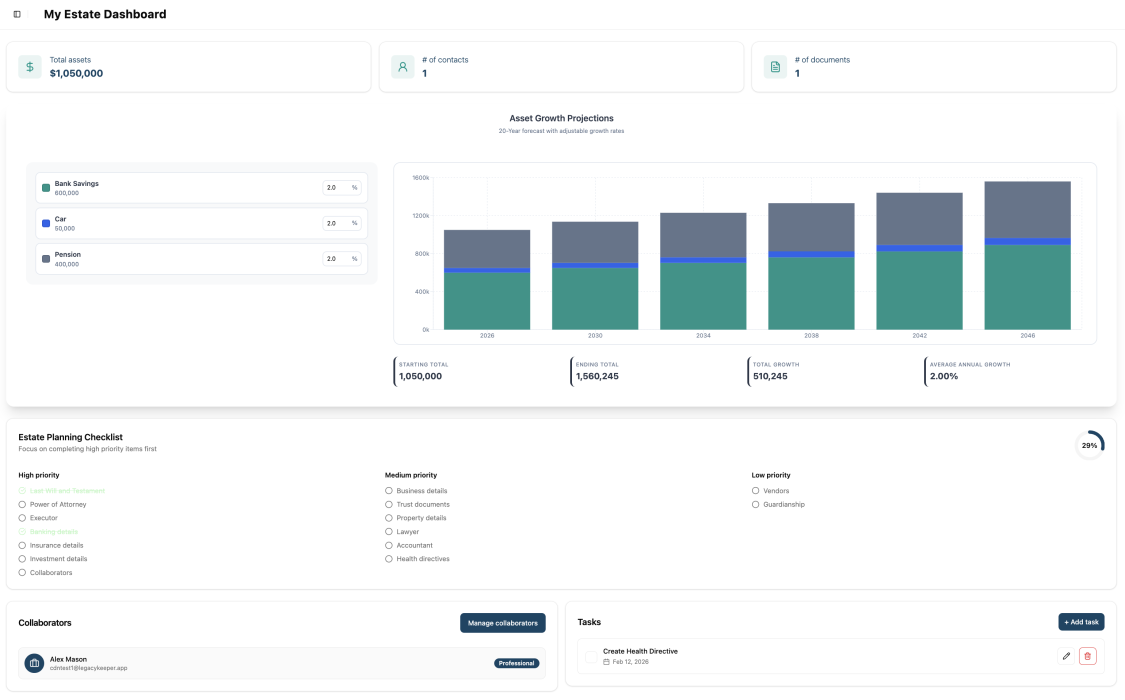
Legacy Keeper supports generational wealth by guiding families and their financial advisors through the estate-planning process, focusing on estate goals, values, and legacy. Our agent reviews key estate-planning data to identify the best ways to support families with relationship management and planning strategies.
Generational Wealth References
[1] Everplans. “How Wealthy Families Go Broke.” https://www.everplans.com/articles/how-wealthy-families-go-broke
[2] Ramsey Solutions. “The National Study of Millionaires.” https://www.ramseysolutions.com/retirement/the-national-study-of-millionaires-research
[3] Eightify. “Do 70-Year-Old Billionaires Regret Their Choices? Insights from Wealthy Individuals.” https://eightify.app/summary/personal-development-and-self-improvement/do-70-year-old-billionaires-regret-their-choices-insights-from-wealthy-individuals
[4] Golub, A. “Billionaires’ Insights on Achieving Work-Life Balance.” https://www.aarongolub.com/post/what-billionaires-say-about-work-life-balance
[5] CNBC. “Billionaire Jimmy John’s founder: Entrepreneurs don’t get work-life balance.” https://www.cnbc.com/2025/10/25/billionaire-jimmy-johns-founder-entrepreneurs-dont-get-work-life-balance.html

Leave a Reply