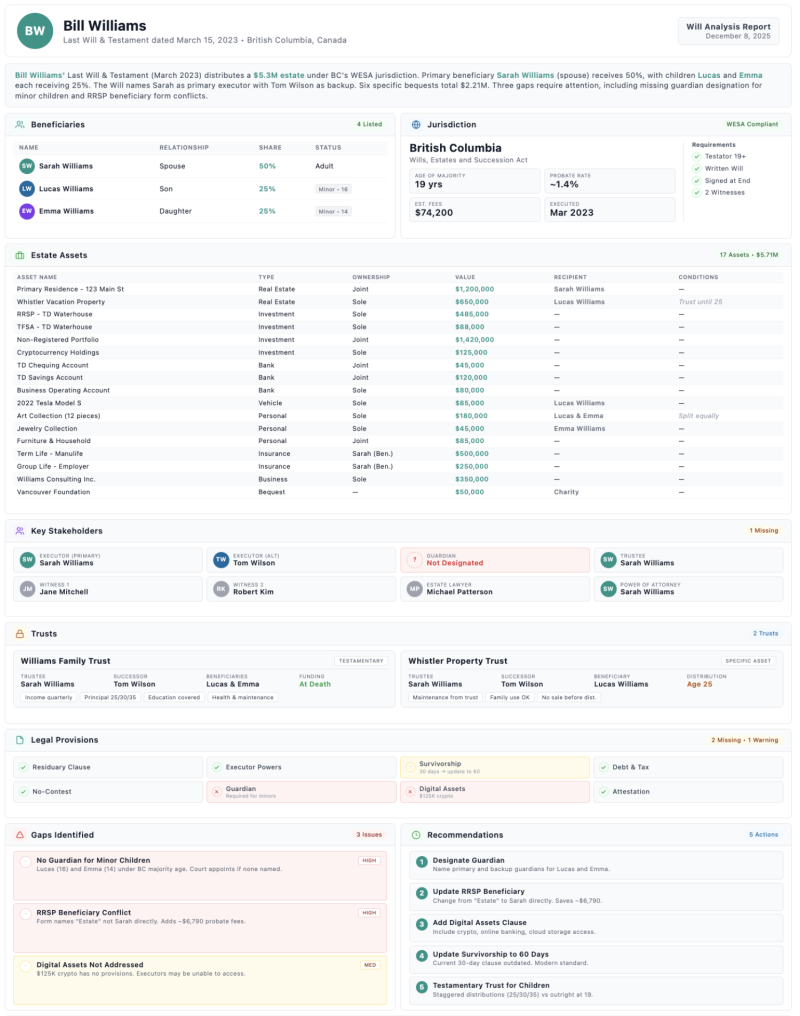
The Will Analysis feature in LegacyKeeper revolutionizes how financial advisors analyze and validate client estate documents. This AI-powered technology provides a comprehensive dashboard that extracts and presents every critical element from last will and testament documents—such as beneficiaries, asset distributions, key stakeholders, trust structures, and legal provisions. It automatically identifies gaps, conflicts, and compliance issues. By uniting automated document extraction, intelligent gap analysis, and AI-driven recommendations, Will Analysis enables advisors to deliver thorough will reviews in minutes, ensuring clients receive actionable guidance to strengthen their estate plans.
What Is the Will Report Feature?
Will Analysis is LegacyKeeper’s comprehensive estate document review and validation solution designed for financial advisors. The intuitive multi-section dashboard organizes all extracted will data into clear categories: Beneficiaries (relationships, share percentages, status), Jurisdiction (legal requirements, compliance), Estate Assets (inventory, values, recipients), Key Stakeholders (executor, trustee, guardian, witnesses), Trusts (testamentary and asset trusts), and Legal Provisions (standard clauses, status).
Will Analysis leverages LegacyKeeper’s advanced AI infrastructure. The system actively analyzes every will against legal requirements, identifies missing elements, flags conflicts with other estate documents, and generates prioritized recommendations. The Gaps Identified section highlights critical issues with clear severity ratings (HIGH, MEDIUM, LOW), while the Recommendations section delivers actionable steps advisors can use to strengthen each client’s estate plan.
The Problem This Feature Solves
Financial advisors face significant challenges when reviewing client wills as part of comprehensive estate planning. Traditional approaches require line-by-line manual review of legal documents, spreadsheet-based tracking of beneficiaries and assets, and separate research into jurisdiction-specific requirements. This fragmented, time-intensive process makes it difficult to identify gaps, conflicts, or missing provisions that could create serious problems when the will is eventually probated.
Additionally, many clients have wills with critical deficiencies they don’t realise exist. Missing guardian designations for minor children, outdated beneficiary designations that conflict with retirement accounts, or a lack of provisions for digital assets can all create unnecessary legal complications, family conflicts, and financial losses. Without a systematic way to analyse will contents, verify legal compliance, and identify optimisation opportunities, advisors struggle to provide the thorough review clients need to ensure their estate plans truly protect their families.
How the Feature Solves These Challenges
LegacyKeeper’s agent-first architecture automates every aspect of Will Analysis. The feature addresses advisor challenges through three key capabilities:
Automated Document Extraction: Will Analysis automatically extracts and categorizes every critical element from uploaded will documents. Beneficiary designations, share percentages, asset inventories, executor appointments, trust provisions, and legal clauses are organized into a structured dashboard. Advisors can review a complete will analysis in seconds instead of spending hours parsing legal language.
Intelligent Gap Analysis: Will Analysis AI compares extracted will contents against jurisdiction-specific legal requirements, identifies missing provisions, and flags conflicts with other estate documents. Each gap is categorized by severity—HIGH for critical issues like missing guardian designations for minor children, MEDIUM for important items such as digital asset provisions, and LOW for optimization opportunities. This prioritization helps advisors focus client conversations on the most urgent improvements.
Actionable Recommendations: Will Analysis generates specific, numbered recommendations to strengthen the estate plan. Each recommendation includes context explaining its importance and the required action—such as designating guardians, updating RRSP beneficiaries to save probate fees, or adding digital asset clauses for cryptocurrency holdings. Advisors can use these recommendations directly in client conversations or as the foundation for detailed planning reports.
Prompt the Agent: Make changes to recommendations and visualisations by prompting the agent based on report outputs. This creates an interactive living report that can be further personalised for your clients.
How to Use the Will Analysis Report Feature
Getting started with Will Analysis is simple:
- Upload the Will Document: Scan or upload your client’s last will and testament into the platform. Will Analysis automatically extracts and analyzes the document contents.
- Review Extracted Data: Examine the populated dashboard sections, including Beneficiaries, Estate Assets, Key Stakeholders, and Trusts. Verify that the extracted information matches the source document and add any missing details.
- Add location data to all records: Review the Jurisdiction section to confirm the will meets all legal requirements for the applicable region, including testator age, witness requirements, and execution format.
- Analyse Gaps and Issues: Review the Gaps Identified section to understand critical issues, conflicts, and missing provisions. Note the severity ratings to prioritise which items require immediate attention.
- Generate AI Recommendations: Click generate to produce AI-powered recommendations based on the complete will analysis. The system provides specific, actionable steps numbered by priority.
- Prepare Client Deliverables: Use the Will Report dashboard and recommendations to create comprehensive client reports that clearly communicate the will’s current state, identified issues, and recommended improvements.
- Share summary and data with attorney: Support your client in updating their document by sharing all outputs with an attorney who can leverage all of the outputs to create a more bespoke document in less time.
Summary
Will Analysis represents a fundamental advancement in how financial advisors analyse and validate client estate documents. By combining automated document extraction, intelligent gap analysis, and AI-powered recommendations, LegacyKeeper enables advisors to deliver thorough will reviews that traditionally take hours to complete manually. The result is better outcomes for clients who receive comprehensive guidance to strengthen their estate plans, and more productive practices for advisors who can instantly identify critical issues and optimisation opportunities.
Will Analysis FAQ
Q: What information does the Will Report extract from documents?
A: The system extracts comprehensive information, including beneficiary names, relationships, and share percentages; complete asset inventories with values and ownership types; executor, trustee, guardian, and witness appointments; trust structures and distribution terms; and all legal provisions such as residuary clauses, no-contest provisions, and survivorship requirements.
Q: How does the system determine jurisdiction compliance?
A: LegacyKeeper identifies the applicable jurisdiction from the will document and compares its contents against region-specific legal requirements. For example, the system verifies testator age requirements, witness count and independence, signature placement, and attestation clause requirements for the relevant province or state. Every contact asset, document and entity has a location that impacts outputs.
Q: What types of gaps can the AI identify?
A: The system identifies critical gaps such as missing guardian designations for minor children, beneficiary designation conflicts between the will and registered accounts, missing digital asset provisions, outdated survivorship periods, execution deficiencies, and coordination issues between the will and other estate planning documents.
Q: How are recommendations prioritised?
A: Recommendations are numbered based on urgency and impact. Critical issues affecting legal validity or creating immediate risk appear first, followed by items that could result in financial loss or family conflict, and finally optimisation opportunities that could improve the overall estate plan.
Q: Can the Will Report identify conflicts with other estate documents?
A: Yes. When you’ve uploaded multiple estate documents into LegacyKeeper, the system compares will provisions against beneficiary designations on registered accounts, insurance policies, and trust documents. The Gaps Identified section flags any conflicts—such as an RRSP naming the estate as beneficiary instead of a spouse, which could trigger unnecessary probate fees.

Leave a Reply