
Why Drafting a Will is Essential
Confronting one’s mortality is never easy, but creating a comprehensive Last Will and Testament is a vital step in safeguarding your legacy and ensuring your loved ones are provided for after you’re gone. Without a legally binding Will, the distribution of your assets and the care of any dependents will be subject to the state’s intestacy laws, which may not align with your wishes. Fortunately, drafting a Will is simpler than most people anticipate, and this comprehensive guide will walk you through every step, empowering you to take control of your estate planning with confidence.
Understanding the Fundamentals
It’s crucial to grasp the fundamentals before diving into the nitty-gritty of Will preparation. A Last Will and Testament is a legally binding document that outlines your final wishes regarding the distribution of your assets, the appointment of guardians for minor children or dependents, and the designation of an executor responsible for overseeing the probate process. This document serves as a roadmap for your loved ones, ensuring your intentions are honored and minimizing potential conflicts or legal complications.
Assessing Your Assets and Liabilities
The first step in crafting your Will is to take a comprehensive inventory of your assets and liabilities. This process may seem daunting, but maintaining a thorough record will ensure nothing slips through the cracks. Begin with a list of tangible assets, such as real estate, vehicles, jewelry, artwork, and family heirlooms. Next, document your intangible assets, including bank accounts, investment portfolios, retirement accounts, life insurance policies, and any intellectual property or business interests you may hold. Use a tool like Legacy Keeper to digitize this list.
Concurrently, it’s essential to account for any outstanding debts or liabilities, such as mortgages, personal loans, or credit card balances. While these liabilities won’t be explicitly bequeathed in your Will, understanding your overall financial situation will aid in effectively distributing your estate and ensuring your loved ones aren’t saddled with unexpected burdens.
Identifying Beneficiaries and Guardians
Once you’ve assessed your assets and liabilities, it’s time to determine who will inherit your worldly possessions. This decision may seem straightforward for some, but it can be a complex and emotionally charged process for others. It’s essential to consider your immediate family and extended relatives, close friends, or charitable organizations you may wish to support.
If you have minor children or dependents, your Will should also designate guardians to assume responsibility for their care and well-being. This decision should be made with careful consideration and open communication with the potential guardians to ensure they are willing and capable of fulfilling this critical role.
Selecting an Executor and Backup
The executor of your Will is pivotal in ensuring your final wishes are carried out according to plan. This individual will oversee the probate process, settle outstanding debts, distribute assets to beneficiaries, and handle any legal or financial matters that may arise. Selecting an executor is a decision that should not be taken lightly, as it requires a great deal of trust, responsibility, and organizational skills.
It’s advisable to choose an executor who is familiar with your personal and financial circumstances and willing to take on the associated duties. Many opt for a close family member, trusted friend, or professional fiduciary such as an attorney or accountant. Additionally, it’s prudent to designate a backup executor if your primary choice can or unwillingly serve in that capacity.
Considering Digital Assets and Online Accounts
In our increasingly digital age, it’s essential to account for your online presence and digital assets when drafting your Will. These assets range from email accounts and social media profiles to online banking portals and cryptocurrency wallets. Failure to adequately address these digital assets could make them inaccessible or mismanaged after your passing.
To ensure a smooth transition, create a comprehensive inventory of all your digital accounts, including login credentials and recovery information. Designate a trusted individual, often called a “digital executor,” to manage and distribute these assets according to your wishes. It’s also advisable to include specific instructions for handling your digital footprint, such as memorializing or deactivating social media accounts.
Gathering Necessary Documents and Information
Before drafting your Will, gather all relevant documents and information to ensure the process is smooth and accurate. This may include birth and marriage certificates, property deeds, mortgage documents, insurance policies, investment account statements, and contact information for your legal, financial, and medical professionals.
Having these documents on hand will streamline the Will-writing process and provide your executor and beneficiaries with a comprehensive understanding of your affairs, minimizing potential confusion or delays during the probate process.
Choosing the Right Will-Writing Method
Once you’ve gathered all the necessary information, it’s time to decide on the best method for drafting your Will. While engaging the services of an experienced estate planning attorney is often recommended for complex situations, many individuals with straightforward estates may opt for more cost-effective alternatives.
Online Will-writing services offer user-friendly platforms that guide you through the process step-by-step, ensuring your Will complies with state-specific laws and regulations. These services typically provide a range of packages, from basic Wills to comprehensive estate planning solutions, allowing you to choose the option that best suits your needs and budget.
Alternatively, you can explore do-it-yourself Will kits or templates, which provide a framework to fill in your specific information. However, exercising caution with these options is essential, as they may not account for the nuances of your particular circumstances or the ever-changing legal landscape.
Ensuring Proper Execution and Witnessing
Once you’ve drafted your Will, it’s crucial to ensure it is properly executed and witnessed according to the laws of your state. Most states require the presence of two or more disinterested witnesses who can attest to your mental competency and the document’s validity.
Sometimes, you may also need to have your Will notarized or accompanied by a self-proving affidavit, which can streamline the probate process by eliminating the need for witness testimony. It’s essential to consult with a legal professional or reputable online service to understand the specific requirements in your jurisdiction.
Storing Your Will Securely
After your Will has been properly executed, it’s essential to store it in a secure location where your loved ones can easily access it when needed. While safety deposit boxes or fireproof safes are standard options, many experts recommend against storing your Will in these locations, as they can be difficult for your executor to access immediately after your passing.
Instead, consider storing your Will with your designated executor, a trusted family member, or an attorney. Alternatively, Legacy Keeper is built to store estate planning documents like your Last Will & Testament, ensuring your document is readily available when needed while maintaining strict confidentiality.
Reviewing and Updating Your Will
Your Will is not a static document; it should evolve alongside your life circumstances. It’s recommended to review and update your Will every three to five years or whenever a significant life event occurs, such as marriage, divorce, the birth or adoption of a child, the acquisition or sale of significant assets, or a change in your designated executor or beneficiaries. Set up reminders and notifications in a system like Legacy Keeper to get those reminders to revisit your estate documents regularly.
Failing to keep your Will up-to-date can lead to unintended consequences, such as assets being distributed contrary to your wishes or guardianship arrangements becoming outdated. Regularly reviewing and updating your Will can ensure your final wishes are accurately reflected, and your loved ones are protected.
Considering Additional Estate Planning Tools
While a well-crafted Will is the cornerstone of any comprehensive estate plan, there are additional tools and documents you may want to consider to ensure your affairs are in order. These may include:
- Living Trust: A legal arrangement that allows you to transfer ownership of your assets to a trust during your lifetime, providing greater control and potentially avoiding probate.
- Power of Attorney: A document granting a trusted individual the authority to make legal and financial decisions if you become incapacitated.
- Advance Healthcare Directive: Also known as a living Will, this document outlines your preferences for medical treatment and end-of-life care, ensuring your wishes are respected if you cannot communicate them yourself.
- Beneficiary Designations: Reviewing and updating the beneficiary designations on your retirement accounts, life insurance policies, and other assets can ensure they are distributed according to your wishes, regardless of the provisions in your Will.
By incorporating these additional tools into your estate plan, you can achieve a comprehensive and tailored approach that addresses every aspect of your affairs, providing peace of mind for you and your loved ones.
The Role of LegacyKeeper in Simplifying Will Preparation
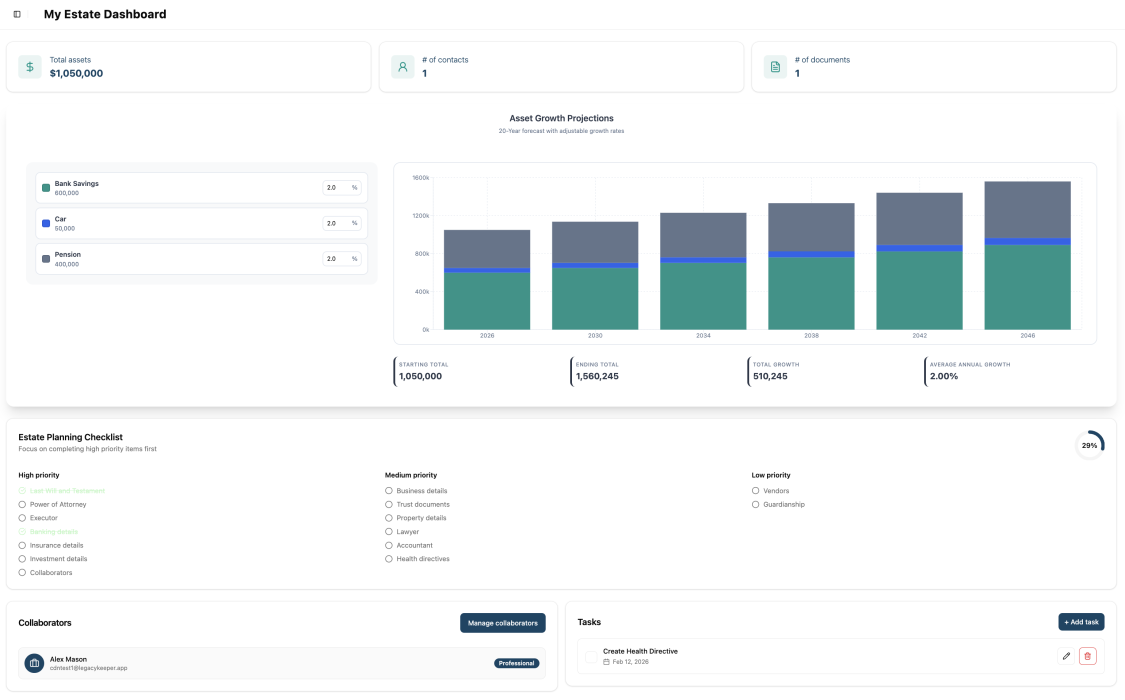
At LegacyKeeper, we understand that navigating the complexities of estate planning can be daunting, especially for those unfamiliar with legal jargon and procedures. That’s why we’ve developed a user-friendly platform that simplifies the estate planning process with an interactive checklist, document vault, collaboration, tasks, and notifications.
By choosing LegacyKeeper, you can rest assured that your loved ones and executor will have access to the information they need to execute on your plan and manage the daily needs of your estate until it is fully executed. Legacy Keeper also provides premium and concierge services that will help guide you in account setup, onboarding, estate planning, professional vetting, and data entry.
Conclusion
Crafting a Last Will and Testament is a legal necessity and a profound act of love and responsibility towards those you hold dear. By following the comprehensive guide outlined in this article, you can confidently approach the process, ensuring your assets are distributed according to your wishes, your dependents are cared for, and your legacy is preserved for generations to come.
Remember, estate planning is an ongoing journey, and your Will should be reviewed and updated regularly to reflect the ever-changing circumstances of your life. By embracing this responsibility and seeking the guidance of professionals or reputable online services like LegacyKeeper, you can easily navigate this process, empowering yourself to make informed decisions and safeguard the future of your loved ones.


Leave a Reply